What happened
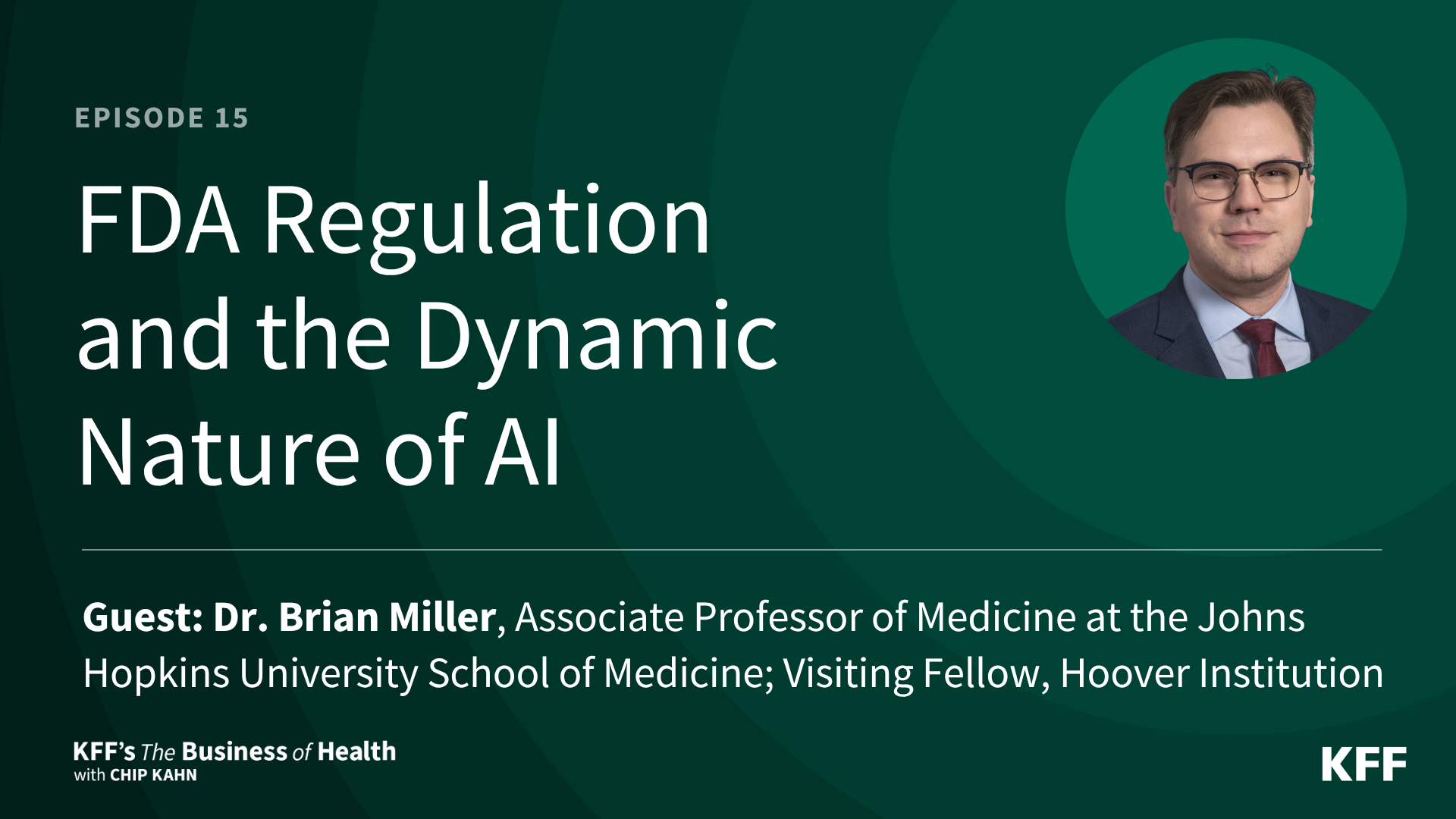
On September 15, 2026, KFF Health News published an episode of The Business of Health with Chip Kahn focused on how the FDA regulates artificial intelligence in health care. The discussion featured Brian Miller, MD, an associate professor at the Johns Hopkins University School of Medicine and a visiting fellow at the Hoover Institution, who has also worked at the Centers for Medicare & Medicaid Services, the Federal Trade Commission, the Federal Communications Commission, and the FDA. KFF framed the core issue as what happens when the FDA applies its 1976 medical device framework to AI, “a technology that learns and changes.” Recorded shortly before the FDA released a discussion paper outlining possible regulatory approaches and inviting stakeholder feedback, the episode closed with Kahn weighing in on that paper.
Why it matters
The immediate takeaway is less about one policy paper than about a structural regulatory mismatch. Miller’s central argument, as described in the source, challenges the assumption that today’s manual system is inherently safer or more consistent. What keeps him up at night, the source says, is not the speed of AI but the risk that “fear-driven regulation” could cost the system the opportunities AI offers. That framing matters because it suggests the next phase of FDA oversight may turn on how much product change regulators are willing to tolerate after launch, not simply whether AI belongs inside the existing device rubric.
For industry, one likely read is that developers will be watching the discussion paper for signals on how the FDA distinguishes between acceptable iteration and changes that trigger heavier review. For payers and health system buyers, the issue extends beyond approval mechanics. If regulatory policy slows deployment of tools that promise more consistency than current manual workflows, adoption curves could flatten even where operational demand is strong. Investors should also pay attention to the overlap between FDA policy and Medicare payment thinking, given Miller’s background across both regulatory and payment institutions. Detailed drug monographs are at ClinicalRx.ai. For adjacent drug and policy developments, see RxNews.ai.