What happened
KFF Health News published its Fall 2026 update on vaccine views on October 20, 2026, based on the latest KFF Tracking Poll on Health Information and Trust. Confidence in most long-standing childhood vaccines remains high: at least three-quarters across partisanship said they are “very” or “somewhat” confident that polio and measles, mumps, and rubella (MMR) vaccines are safe for children. Majorities also expressed confidence in flu and hepatitis B vaccines for children, although Democrats were more confident than Republicans.
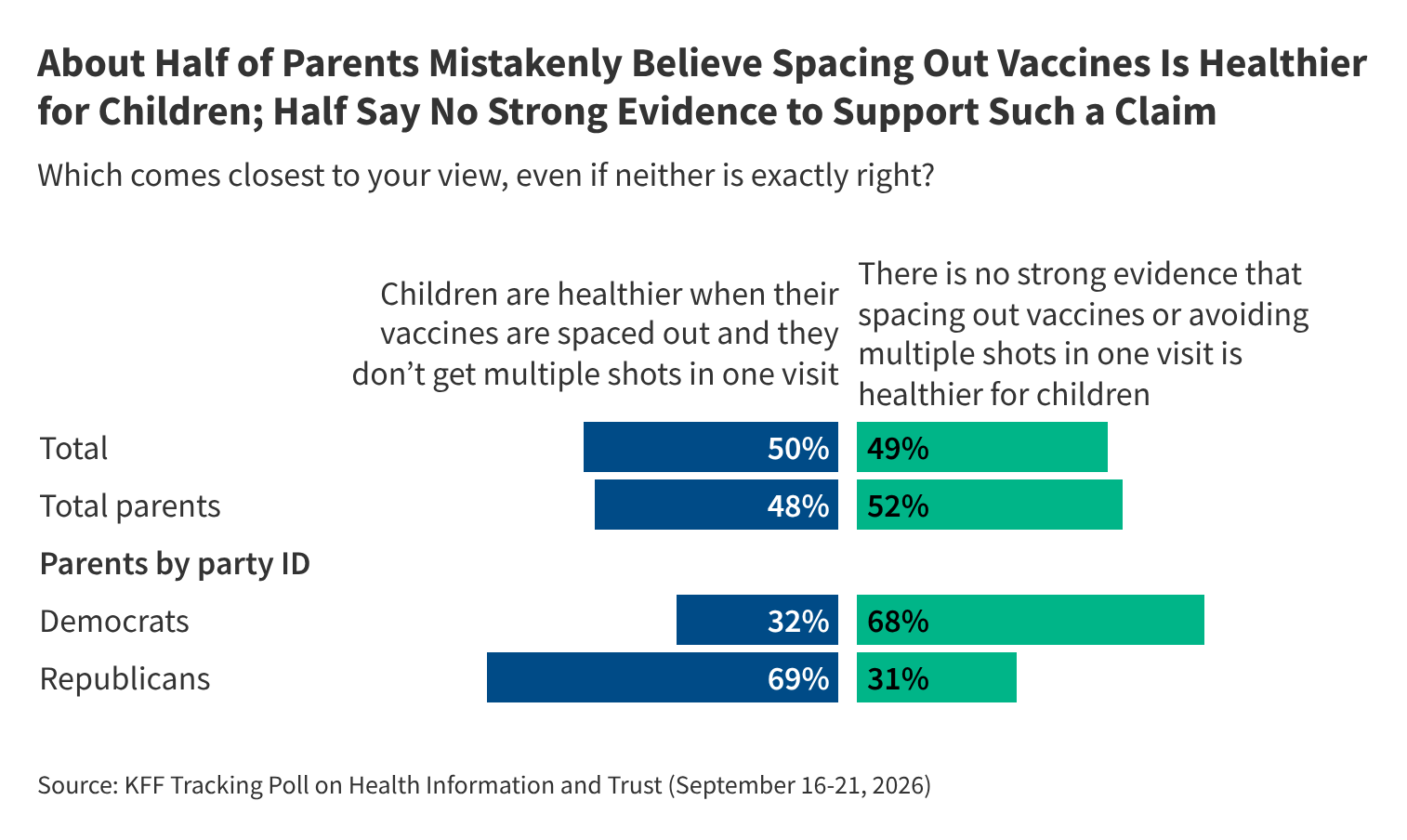
COVID-19 vaccines were the sharp exception. Half of the public said they are confident COVID-19 vaccines are safe for children, including 77% of Democrats and 21% of Republicans. Four in ten adults said they are confident these vaccines are safe for pregnant people, including 62% of Democrats and 17% of Republicans. The poll also found that about half of parents think children are healthier when vaccines are spaced out and they do not get multiple shots in a single visit. The other half say there is no strong evidence that it is healthier to do so. KFF said there is no evidence to support such claims.
Why it matters
This reads less like a demand shock for routine pediatric vaccination than a trust-fracture story centered on COVID-19 and, to a lesser degree, hepatitis B and flu. For manufacturers, pediatricians, and public health stakeholders, the practical takeaway is that the legacy franchise still appears resilient in public opinion. COVID-19, meanwhile, remains politically sorted in a way that likely complicates uptake, counseling, and any future maternal immunization messaging. The pregnancy finding stands out: KFF said most adults, including eight in ten women of reproductive age, express uncertainty about whether COVID-19 vaccination during pregnancy increases the risk of miscarriage, which KFF described as a false claim.
For payers and benefits leaders, one likely read is that coverage policy is not the pressure point here. Confidence is. The poll suggests confusion around vaccine spacing and pregnancy-related COVID-19 safety claims is now mainstream enough to affect parent decision-making at the point of care. Investors should also watch whether this polarization stays largely confined to COVID-19 or starts to erode confidence in broader pediatric categories. So far, KFF’s data point the other way for polio and MMR, but the split on flu and hepatitis B suggests the perimeter bears watching. For broader drug and vaccine coverage, see RxNews.ai. For clinical reference on vaccine categories, see ClinicalRx.ai.