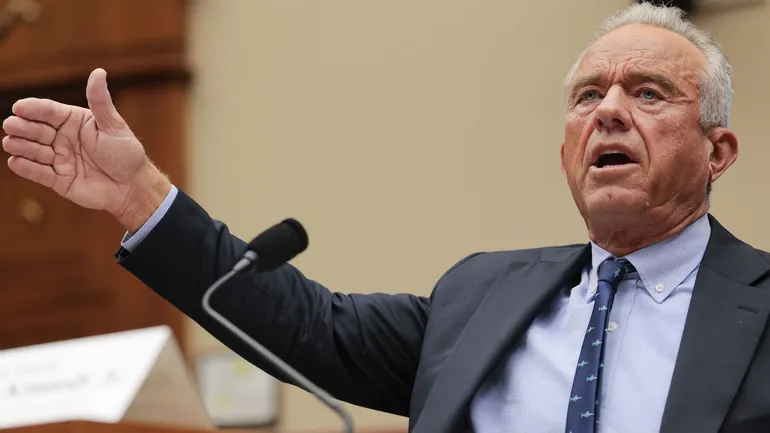
HHS Secretary Robert F. Kennedy Jr. defended both his record and the Trump administration’s proposed 12.5% cut to the department’s discretionary budget, nearly $16 billion, during House hearings last week. The fiscal 2027 plan would trim NIH funding by $5 billion and fold several smaller institutes focused on minority health, global health, and alternative medicine into larger divisions. It would also take $4 billion from the low-income energy assistance program and squeeze the already weakened Agency for Healthcare Research and Quality, down more than half its staff since the administration began. Republicans largely backed Kennedy’s focus on fraud control and nutrition reform. Still, a few, notably Rep. Stephanie Bice of Oklahoma, warned that slashing NIH resources risks slowing biomedical innovation and handing China an edge in biotech leadership.
This internal Republican divide highlights a larger rift between fiscal conservatives pushing for austerity and biotech advocates treating NIH as a national security priority. A 12% HHS reduction would not be a minor course correction, it would reset the federal research landscape. The shock would ripple through academic medical centers, contract research firms, and the startup labs built on NIH seed money. It aligns with an administration tilt toward a slimmer health bureaucracy after 2025’s Medicaid trims and the phaseout of enhanced ACA subsidies. The pattern is deliberate: rein in spending, narrowly define federal health missions, and expect private markets to fill the gaps. Whether Congress softens these numbers later this year is genuinely uncertain, but if the $5 billion NIH hit stands, investors should brace for slower momentum in grant-backed translational science, and a heavier lean on private R&D capital. Personally, I doubt the venture market has the patience (or the margins) to absorb all of that pressure. For more data on policy-driven R&D dynamics, see RxInfo.ai.


