What happened
KFF Health News detailed the Rural Health Transformation Program created in the budget reconciliation law signed by President Trump on July 4, 2025. The law was projected to reduce federal Medicaid spending by $911 billion over ten years, including an estimated $137 billion in rural areas, according to KFF analysis.
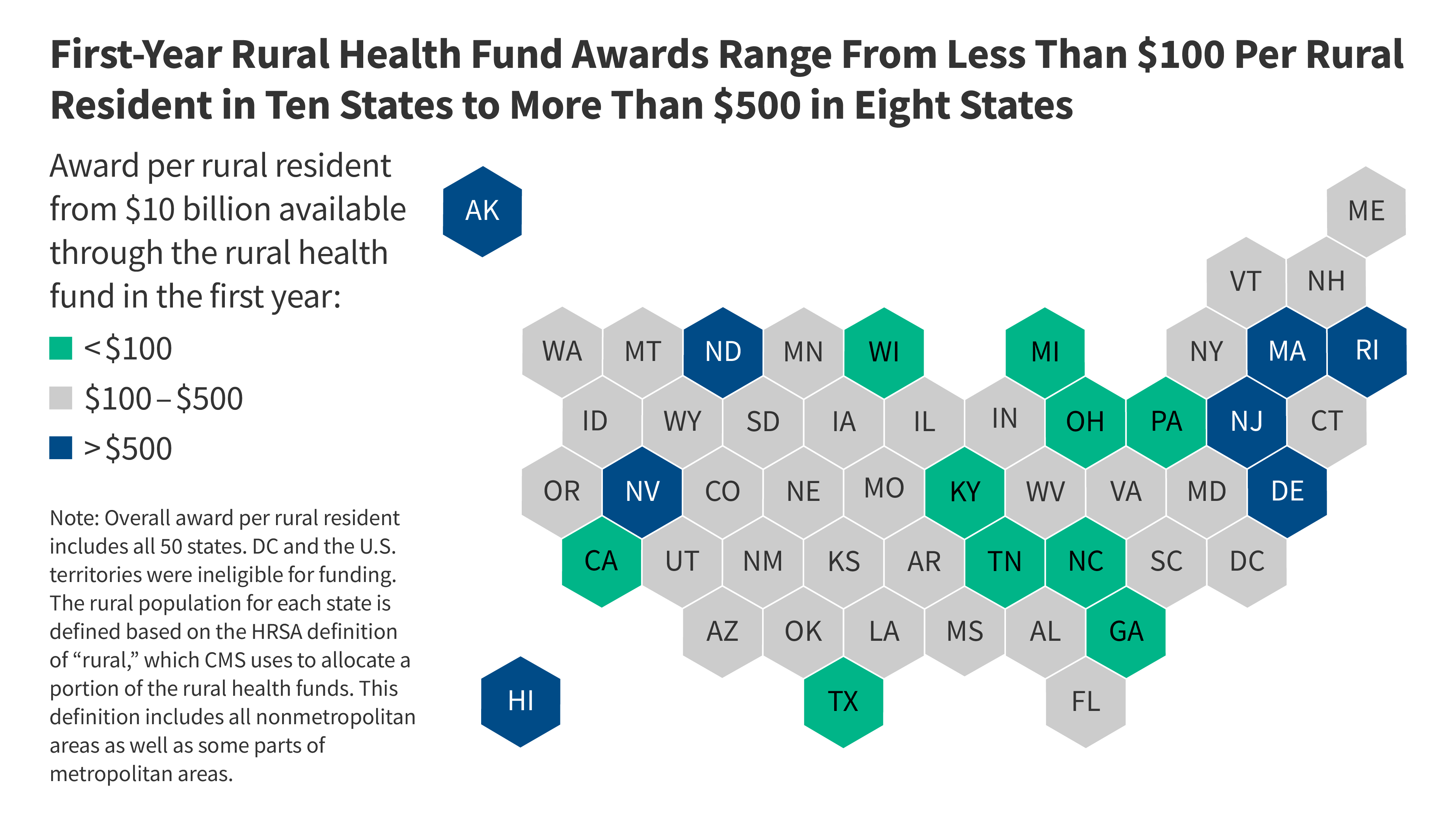
To help mitigate that impact, the law created a $50 billion state grant program running from fiscal 2026 through 2030, with $10 billion awarded each year and all funds required to be spent by the end of fiscal 2032. CMS oversees the program through the Office of Rural Health Transformation. All 50 states were approved. Half of the funding is divided equally among approved states, while the rest is distributed based on measures including state need, state initiative scores, state policy, and other factors. First-year awards ranged from $147 million to $281 million, and first-year awards per rural resident ranged from less than $100 in ten states to more than $500 in eight.
Why it matters
The core policy point is straightforward: this is a large rural health investment, but by the source’s own framing it “could mitigate but will not fully offset” the estimated rural Medicaid cuts in the same law. That gap matters for hospitals, Medicaid plans, and state officials. The fund is smaller than the projected rural reduction and time limited, while most of the spending cuts are not described that way.
There is also a question of scope. The fund was created amid concerns about rural hospitals, but KFF says it is being used for a “much broader set of purposes,” and there are restrictions on how hospitals can benefit. Not direct hospital relief. That means investors and operators shouldn’t read the headline number that way.
Our take is that the real story now shifts from authorization to allocation. CMS has “substantial leeway” over distribution, permitted uses, and terms and conditions, and states will administer programs through cooperative agreements with CMS. The practical winners and losers will be determined less by the $50 billion headline than by how states prioritize activities and entities inside their approved programs, and by how quickly they can put funds to work before the fiscal 2032 deadline. Payers and providers will also be watching whether this becomes a bridge to care redesign in rural markets or just a temporary patch against a much larger funding downshift. For employer-side PBM benchmarking, see RxPBM.ai. Detailed drug monographs are at ClinicalRx.ai.